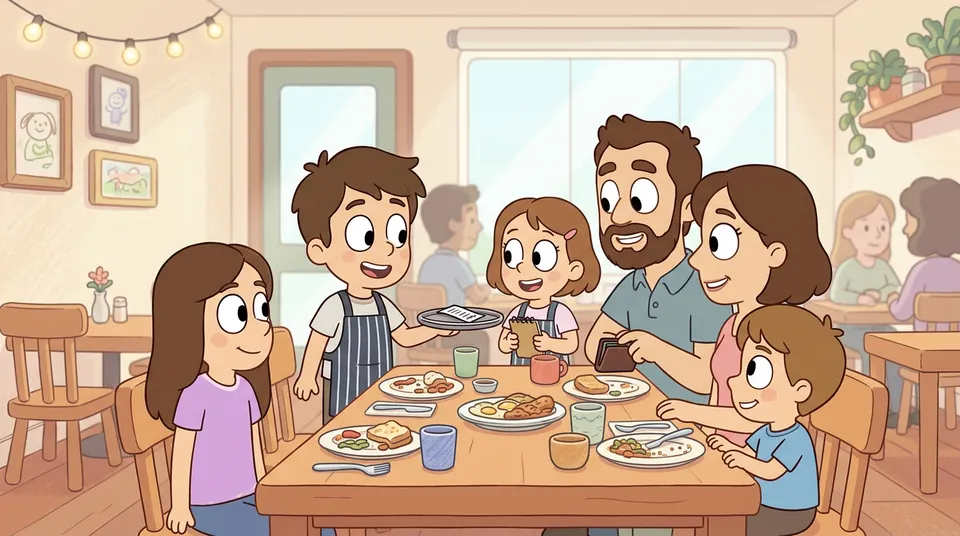
Going out to eat is a special occasion for most children. The menu, the ordering, the bill at the end — restaurants are full of money moments. In myplayshop’s restaurant, your child is the one presenting the bill and handling the payment.
Your child runs the front of house. Customers sit down, order from the menu, and enjoy their meal. Then your child totals the bill, takes payment, and gives the right change.
Why the Restaurant Works So Well
The restaurant brings something unique to myplayshop:
- Full meal orders — Starter, main, drink, dessert. Four items is a meaningful addition challenge
- Higher price points — Restaurant meals cost more than sweets or bakery items, introducing bigger numbers
- A setting children aspire to — Playing restaurant feels grown-up, which motivates older children especially
What a Typical Bill Looks Like
A customer orders dinner:
- Soup: $4.50
- Burger and chips: $9.00
- Orange juice: $2.50
- Chocolate cake: $5.00
- Total: $21.00
- Customer pays with: $25.00
- Change needed: $4.00
Four courses, a total over $20, and change from a larger amount. This is where confident number skills really develop.
Building Multi-Step Maths
The restaurant naturally creates complex transactions:
Course-by-course addition. Each course adds to the bill. Children learn to keep a running total — “Soup was $4.50, now add the burger at $9, that’s $13.50…”
Working with larger numbers. When a single main course costs $9 or $12, totals climb quickly. Children get comfortable with two-digit amounts.
Real menu logic. Children start to understand how pricing works — starters cost less than mains, drinks less than food. This builds number sense and real-world awareness.
Age Progression
- Ages 5–6 — Taking simple orders: a main and a drink. Adding two prices and handling small bills
- Ages 7–8 — Full three-course meals. Totals in the $15–$25 range, with change from $20 or $30
- Ages 9–10 — Large party orders, quick calculations, and change from $50. Some children start estimating the total before adding it up exactly
The Social Side of Restaurant Maths
Restaurants are inherently social — and so is the maths:
- Menu reading — Before your next family meal out, let your child read the menu and guess what the bill might be
- Bill checking — When the bill arrives, can your child check it’s correct? Add up the items together
- Splitting the bill — For older children: “The bill is $40 and there are four of us. How much each?”
- Tipping — “The bill is $30. What’s a $5 tip? What about 10%?” A gentle introduction to percentages