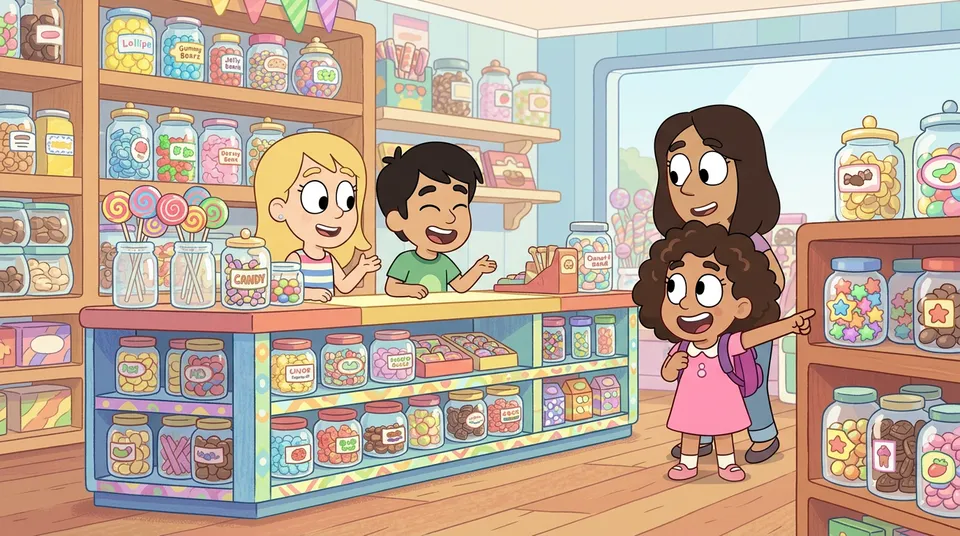
What child can resist a candy shop? Shelves full of colourful sweets, jars of lollipops, and rows of chocolate bars — the candy shop is pure excitement for young players. That excitement is exactly what makes the maths stick.
In myplayshop’s candy shop, your child runs the counter. Customers come in wanting their favourite sweets. Your child rings up the order, takes payment, and gives the right change.
Why Kids Love the Candy Shop
The candy shop is one of myplayshop’s most engaging themes for younger children:
- The products are irresistible — Sweets, chocolate, and lollipops are things children genuinely care about
- Small, friendly prices — A lollipop for $0.50, a chocolate bar for $1.25 — these numbers don’t intimidate
- Lots of variety — Many small items means multi-item orders that build addition skills naturally
What a Typical Transaction Looks Like
A customer walks in and orders:
- Lollipop: $0.50
- Chocolate bar: $1.25
- Bag of gummy bears: $2.00
- Total: $3.75
- Customer pays with: $5.00
- Change needed: $1.25
Your child adds up three prices, confirms the total, takes the money, and works out the change. Real maths, wrapped in a sweet shop.
Building Coin Confidence
The candy shop is especially powerful for developing coin skills:
Small prices mean lots of coins. When items cost under a dollar, children work with pennies, nickels, dimes, and quarters constantly. They get to know their coins inside out.
Quick transactions. Candy purchases are fast — a customer might buy just one or two items. That means more transactions per session, and more practice.
Manageable totals. Even a big candy order rarely exceeds $5–$6. Children can hold these numbers in their head without getting overwhelmed.
Perfect Age Progression
- Ages 4–5 — Buying a single sweet. Recognising coins and matching them to a small price
- Ages 5–7 — Two or three items per order. Adding small amounts and counting change from $5
- Ages 7–10 — Handling busy orders quickly. Giving change efficiently and spotting faster coin combinations
From Candy Shop to Real Life
- Sweet shop trip — Next time you visit a sweet shop, let your child pick items and calculate the total before you pay
- Pocket money maths — “You have $2. What sweets can you afford?” is a real budgeting exercise
- Price per piece — “This bag has 10 gummy bears and costs $2. How much is each one?” introduces early division thinking